Why We’re Here:
The Empathy Pandemic, Disenfranchised Teachers, and Leaders Who’ve Lost the Room.
There is a growing gap in education that too many people can feel, but too few can name clearly.
Classrooms are louder. Corridors are harder to manage. Sanctions do not land the way they used to. Staff feel they are carrying more emotional weight than ever, while being given fewer meaningful levers to keep learning safe. And at the same time, the language around behaviour has shifted so dramatically that doing the basics well, boundaries, consequences, follow through, can now be framed as lacking compassion.
Ordem Advisory exists because we have reached a tipping point. A system that wants to be kind has, in places, forgotten how to be firm. A system that wants to support has, in places, stopped holding people to account. And a system that wants to be inclusive has, in places, failed to protect the many in its effort to rescue the few.
This is not a call for harsher schools. It is a call for honest schools, where empathy and accountability are not competitors, but partners.
How did we get here?
Behaviour did not suddenly decline. What we are seeing now is the cumulative effect of pressures that have been building for years.
Rising levels of need, social, emotional, economic, mental health, online harm.
The normalisation of dysregulation and conflict as just how it is now.
Inconsistent policy follow through, within schools and across systems.
A professional culture where staff are expected to absorb unlimited strain quietly.
A leadership narrative that sometimes prioritises optics over operational reality.
This has created a perfect storm. Students pushing boundaries in a world where boundaries are increasingly negotiable, and teachers trying to hold the line while being told, explicitly or implicitly, that holding the line is the problem.
The empathy pandemic, when compassion becomes an excuse
Empathy is essential in education. Any school that loses compassion loses its humanity.
But there is a form of empathy that is not compassion at all. It is misplaced empathy, the kind that explains behaviour so thoroughly that it quietly excuses it.
It sounds like this;
They cannot help it.
They have been through a lot.
We need to understand the context.
It is a trauma response.
We cannot sanction because it might damage the relationship.
Context matters. Trauma matters. Need matters. But there is a critical distinction that education has to hold firmly.
Understanding a behaviour is not the same as permitting it.
When we confuse the two, we unintentionally teach a damaging lesson. That feelings override responsibility. That harm is tolerable if the person causing it has a backstory. That rules apply differently depending on who is breaking them. And that the adults will absorb the consequences so the child does not have to.
That is not empathy. That is abdication.
Real empathy says:
I see you.
I hear you.
I understand why you are struggling.
And I am still going to keep everyone safe.
And I am still going to teach you the boundary.
Because children do not just need understanding. They need structure. They need predictability. They need adults who mean what they say.
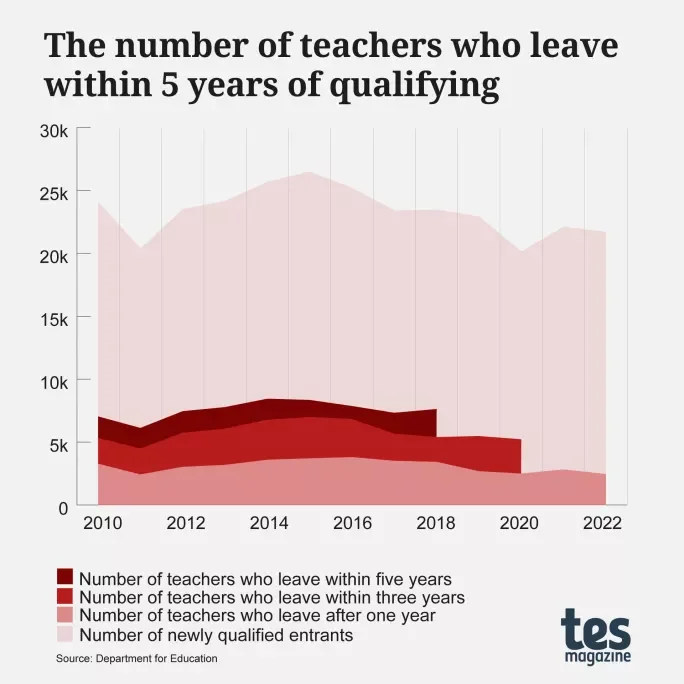
Who pays the price? Disenfranchised teachers
When systems soften boundaries without replacing them with robust alternatives, the burden doesn’t disappear. It moves. It lands on the classroom teacher.
The teacher becomes the behaviour policy. The teacher becomes the emotional regulator. The teacher becomes the de-escalation team. The teacher becomes the social worker. The teacher becomes the parent liaison. The teacher becomes the punchbag, sometimes metaphorically, sometimes literally.
And then we act surprised when teachers feel disenfranchised.
Disenfranchisement isn’t simply “staff are tired”. It is a deeper erosion:
Erosion of agency: “I can’t sanction without permission.”
Erosion of credibility: “The student knows nothing will happen.”
Erosion of dignity: “I’m expected to tolerate what would be unacceptable anywhere else.”
Erosion of trust: “Leaders don’t back us consistently.”
Erosion of meaning: “Learning is no longer the priority; managing chaos is.”
There is a particular kind of exhaustion that comes from being told your job is to teach, while being given a daily reality that makes teaching secondary. It creates moral injury: staff know what pupils need, know what would work, and watch systems avoid it.
You cannot build a stable school culture on staff who feel unheard, unsupported, and blamed.
What we believe at Ordem Advisory
We believe the current landscape can change rapidly, when schools get clear on first principles.
Empathy and accountability are not opposites.
The most trauma-informed practice is consistent boundaries delivered with respect.Teachers deserve protection, clarity, and follow-through.
Staff wellbeing is not a yoga session. It is operational reliability.Students deserve adults who do not negotiate safety.
Restorative approaches are powerful when they sit alongside non-negotiable “red lines”.Leadership must be visible where behaviour lives.
Culture isn’t built in meetings. It’s built in corridors, on-call decisions, detention follow-through, and parent conversations that don’t flinch.Systems beat slogans.
If your behaviour strategy depends on heroic individuals, it will fail. If it’s built into routines, thresholds, and predictable responses, it will hold.

What we believe at Ordem Advisory
We believe the current landscape can change, rapidly, when schools get clear on first principles.
Empathy and accountability are not opposites. The most trauma informed practice is consistent boundaries delivered with respect.
Teachers deserve protection, clarity, and follow through. Staff wellbeing is not a yoga session.
It is operational reliability.
Students deserve adults who do not negotiate safety. Restorative approaches are powerful when they sit alongside non negotiable red lines.
Leadership must be visible where behaviour lives.
Culture is not built in meetings. It is built in corridors, on call decisions, detention follow through, and parent conversations that do not flinch.
Systems beat slogans. If your behaviour strategy depends on heroic individuals, it will fail. If it is built into routines, thresholds, and predictable responses, it will hold.
Why we are here
Ordem Advisory exists to help schools rebuild what has been lost.
Clarity without cruelty.
Empathy without excuse making.
Inclusion without sacrificing safety.
Restorative culture with real accountability.
Leadership alignment that staff can trust.
We are here because staff deserve to feel proud of the job again, not merely survive it.
And we are here because pupils deserve the truth. Life has rules, relationships have limits, and your future depends on learning how to manage yourself even when your emotions are loud.
If we can restore that, we can restore learning.
